Driving from the UK to Spain with a Dog — The Complete 2025 Guide (Eurotunnel, AHC & Luxury Stops)
So there we were. Two friends, one dog, one car, and a very ambitious plan to drive from Surrey all the way to Marbella, Spain. People thought we were mad. "What about the dog?" they kept asking. "Isn't it really complicated now since Brexit to travel to Europe with a dog?"
The honest answer? No. It really isn't. Yes, there's a little more paperwork than there used to be, but once you've got your dog's travel documents sorted — which takes one vet appointment and about 20 minutes of your time - the actual border crossings are genuinely straightforward. Nobody stopped us. Nobody made us feel stressed. The dog was utterly unbothered by the whole thing.
If you've been putting off a big European road trip with your dog because the post-Brexit pet travel rules have felt overwhelming, let me walk you through exactly what we did. I promise driving to Spain with a dog is easier than you think.
First Things First: What Your Dog Actually Needs
Let's get the admin out of the way up front, because once you understand what's required, you'll realise it's not nearly as daunting as the internet makes it sound.
1. A Microchip
Your dog needs to be microchipped with an ISO-compliant chip (the standard 15-digit one). If your dog is already chipped, which the vast majority of UK dogs are then you're already sorted on this one. Just make sure you know the chip number, as you'll need it for the vet paperwork.
2. A Valid Rabies Vaccination
Your dog needs an up-to-date rabies vaccination, and this must have been given at least 21 days before you travel. This is the one that can catch people out! You can't leave it until the last minute and get jabbed the week before departure. Book this well in advance. If your dog has had previous rabies vaccinations and they're still in date, you're fine - no waiting period applies to boosters, only to the very first vaccination.
3. An Animal Health Certificate (AHC) - Not a Pet Passport
This is the big one. Since Brexit, UK-issued pet passports are no longer valid for travel to the EU. What you need instead is an Animal Health Certificate, or AHC.
Here's what you need to know about it:
It must be issued by an Official Veterinarian (a vet who has completed additional government-approved training to issue these documents — not every vet can do this, so check in advance)
It must be issued no more than 10 days before your travel date
It must be issued no more than 21 days after your dog's most recent rabies vaccination
It covers up to 5 pets on one certificate
It is single use - you need a new one every time you travel from the UK to the EU
One thing I didn't realise until I looked into it: the language of the AHC depends on which country you're entering first. Because we drove through France before reaching Spain, our certificate needed to be in English and French — not English and Spanish. If you're flying directly to Spain or taking a ferry to a Spanish port, you'd need English and Spanish. Worth double-checking with your vet.
The cost varies between vets, but expect to pay somewhere between £150–£300 depending on where you go. It sounds like a lot but it's a one-off for the trip, and honestly, for the peace of mind it gives you at the border, it's completely worth it.
Top tip: Abbeywell Vets in Folkestone is a popular choice for people crossing via Dover or the Eurotunnel, as they're very experienced with AHCs and are competitively priced. You can even request the certificate online for collection when you arrive.
The Eurotunnel - Genuinely the Easiest Thing Ever
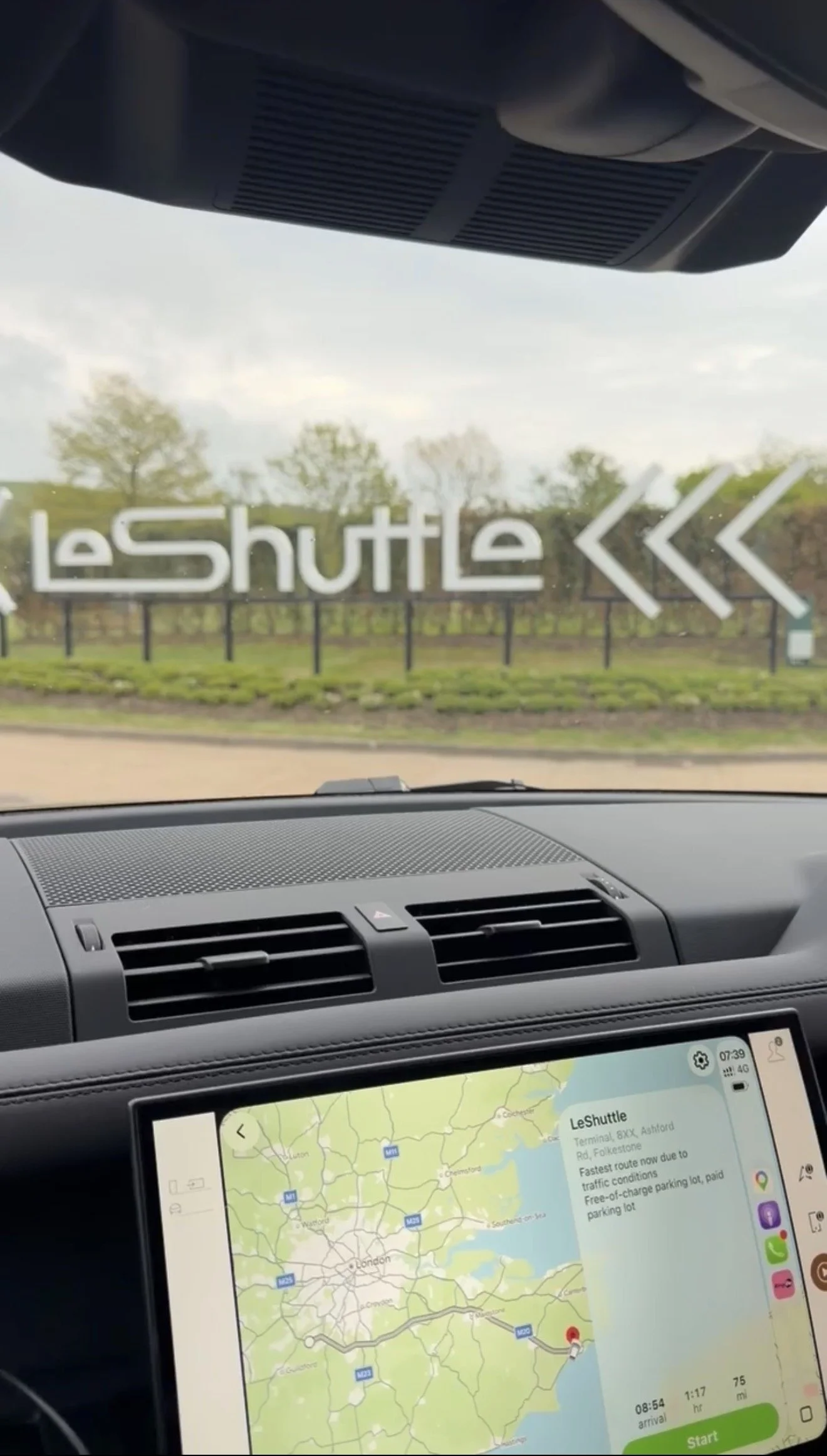
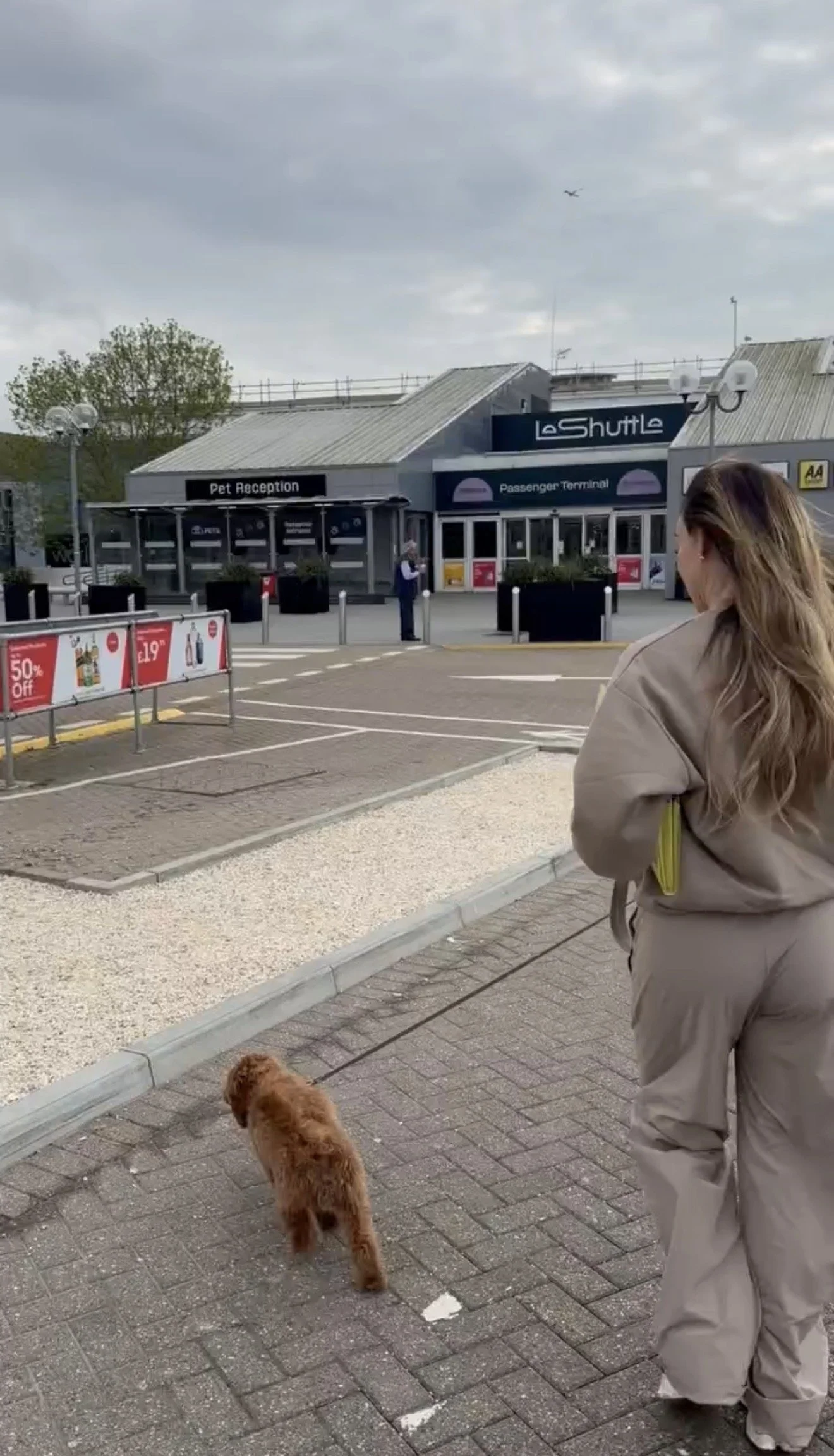
We chose the Eurotunnel from Folkestone to Calais, and I cannot recommend it highly enough for travelling with a dog.
The crossing itself takes just 35 minutes. You drive your car onto the train, sit in it (or get out and stand next to it, there's a narrow walkway), and before you know it you're in France. There's no sea, no waves, no stress about your dog being in the hold or separated from you. He just sat in the back of the car the entire time, chewed his toy, and went to sleep. Bliss.
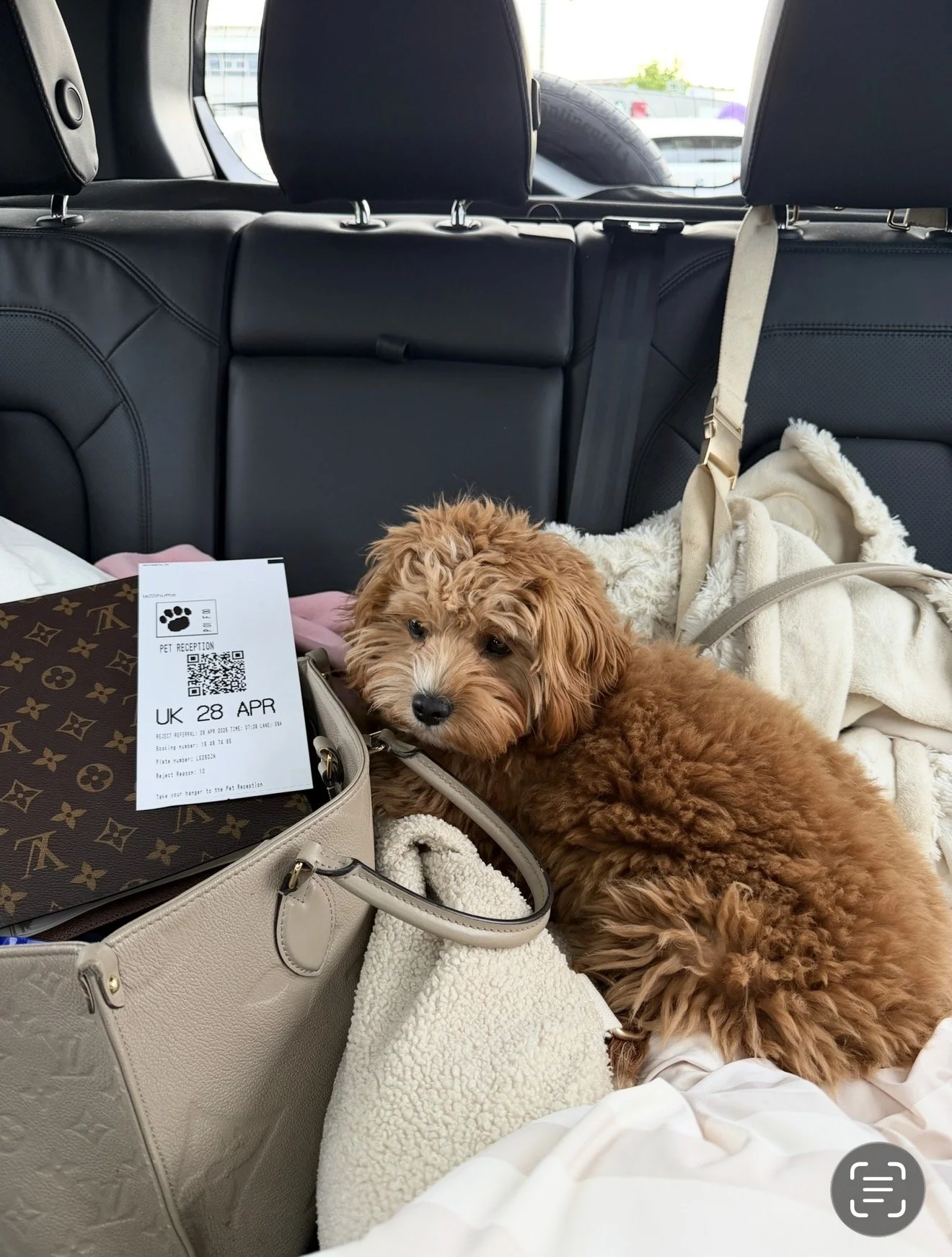
What happens at the Eurotunnel with a dog:
You'll pay an additional fee for your pet when you book - around £24–£30 each way. When you check in at Folkestone, declare you have a dog and they'll direct you accordingly. Before you board, you'll need to present your dog's AHC and the border staff will check it along with your passports. They scanned our dog's microchip to match it against the certificate. The whole thing took about five minutes — they were friendly, efficient, and completely lovely about it.
That's it. Genuinely. You then drive onto the train and you're done.
A note for 2025/2026 travellers: there is now a new EU Entry/Exit System (EES) in place, which involves biometric checks (passport scan, fingerprint, photo) for UK passport holders entering the Schengen area. Don't be alarmed - it's new but it's quick, and the staff at the terminal walk you through it. Just allow a bit of extra time at check-in.
Our Route: Champagne, South of France, Barcelona, Marbella
Stop One: The Champagne Region, France
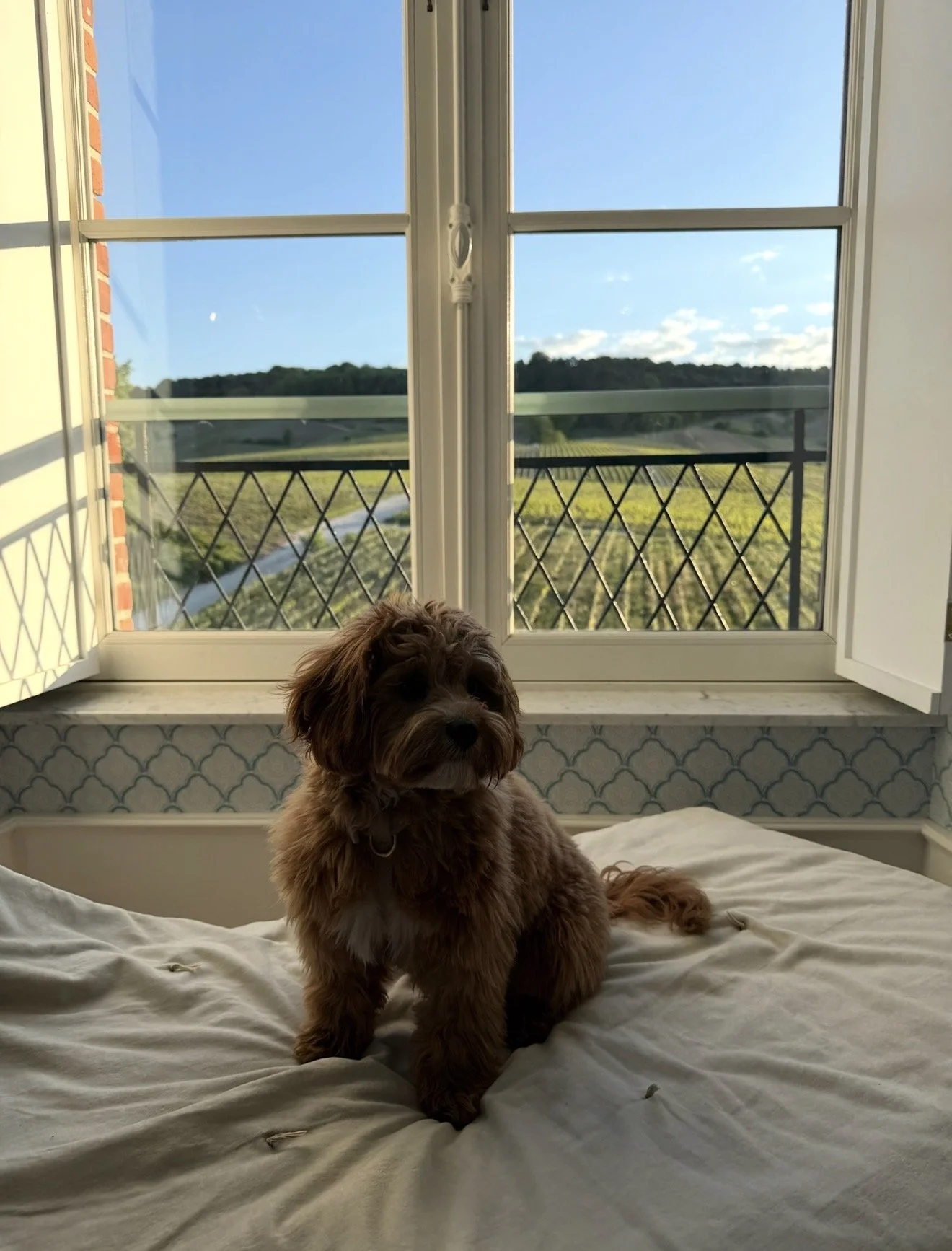
After emerging from the Eurotunnel into a grey but beautiful French morning, our first overnight was in the Champagne region and what a place to start.
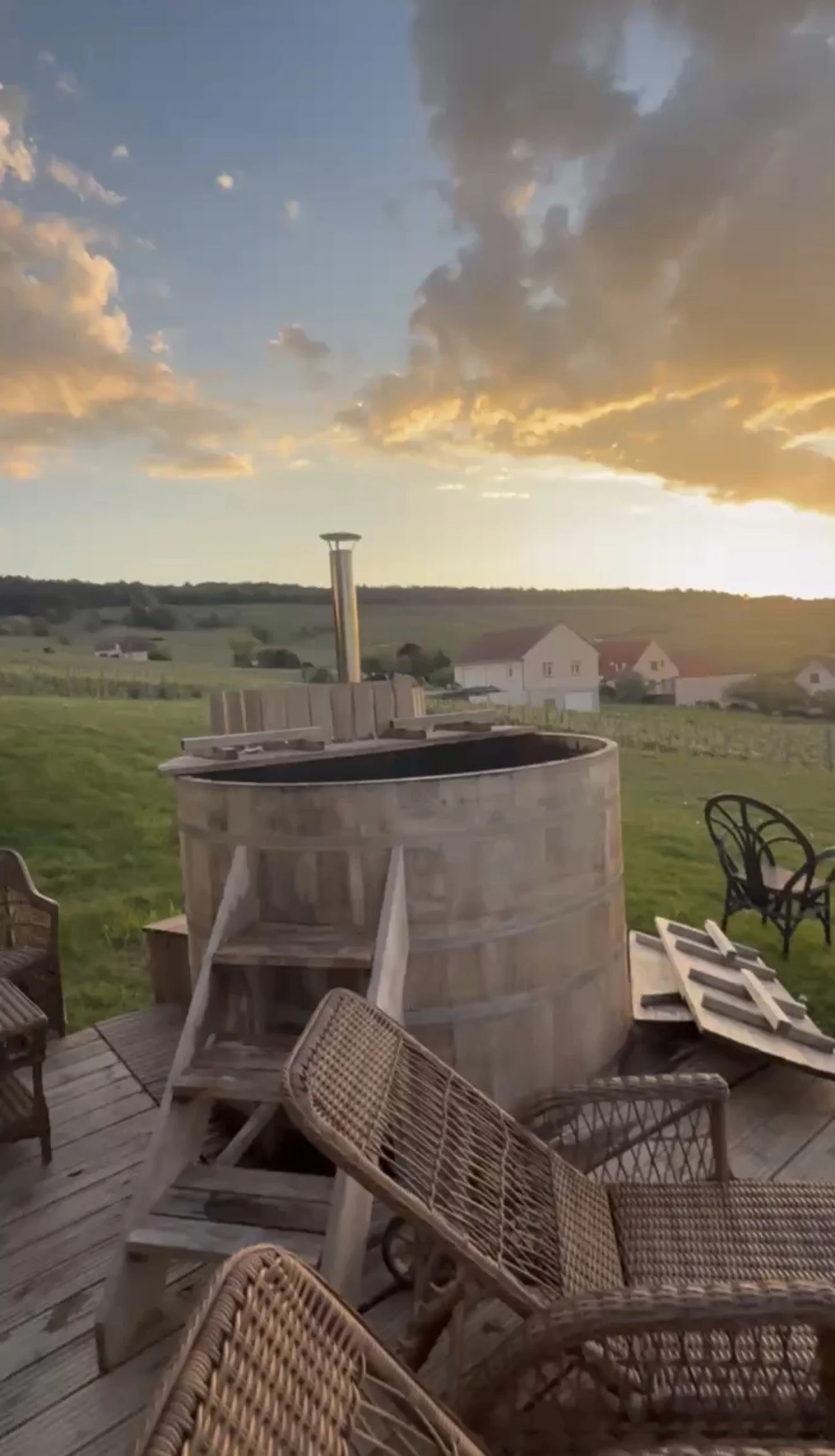
We stayed at the most stunning vineyard hotel — picture rolling vines in every direction, a gorgeous old stone château, and a dining room that smelled faintly of oak barrels and something delicious cooking in a kitchen somewhere. The dog was welcomed without a second thought, given a bowl of water in the courtyard, and proceeded to charm every member of staff in the building. France, it turns out, is wonderfully dog-friendly in a way that feels completely natural rather than performative.
(Full review of the château coming soon — it absolutely deserves its own post.)
Stop Two: The South of France - Hôtel Plage
From Champagne we headed south, chasing the sun down through France until the light started to change and the air smelled different — warmer, drier, with something herby underneath it. We stopped in the south of France and stayed at a beautiful beach hotel right on the water.
If you've never sat on a terrace with a glass of rosé watching your dog absolutely lose his mind with joy at the sight of the sea for the first time, I urge you to add it to your bucket list immediately. He paddled. He ran in circles. He was the happiest creature alive.
(Hotel review coming soon.)
Stop Three: Barcelona
A quick overnight in Barcelona before pushing on to Marbella. Even here, travelling with a dog wasn't the headache I feared. Spaniards are warm and welcoming to dogs in a way that genuinely surprised me - he was petted approximately nine hundred times on a short walk through the Gothic Quarter.
Crossing Into Spain - No Drama Whatsoever
Since we drove through France first, entering Spain from the French side at the border near Irun/San Sebastián is and I say this knowing some people will be surprised — completely uneventful.
France and Spain are both in the Schengen Area, so there's no formal border crossing for your car or your dog when you drive between them. You'll see a sign welcoming you to Spain and that's about it. No checkpoints, no stopping, no document inspection. We literally just drove through.
That said: keep your AHC accessible and printed. Border officials anywhere can stop vehicles at random, and if they do, you want everything ready to go in a folder on the passenger seat. We never needed ours on the French-Spanish border, but we had it ready just in case.
What to Do If Something Goes Wrong - And We Did Break Down
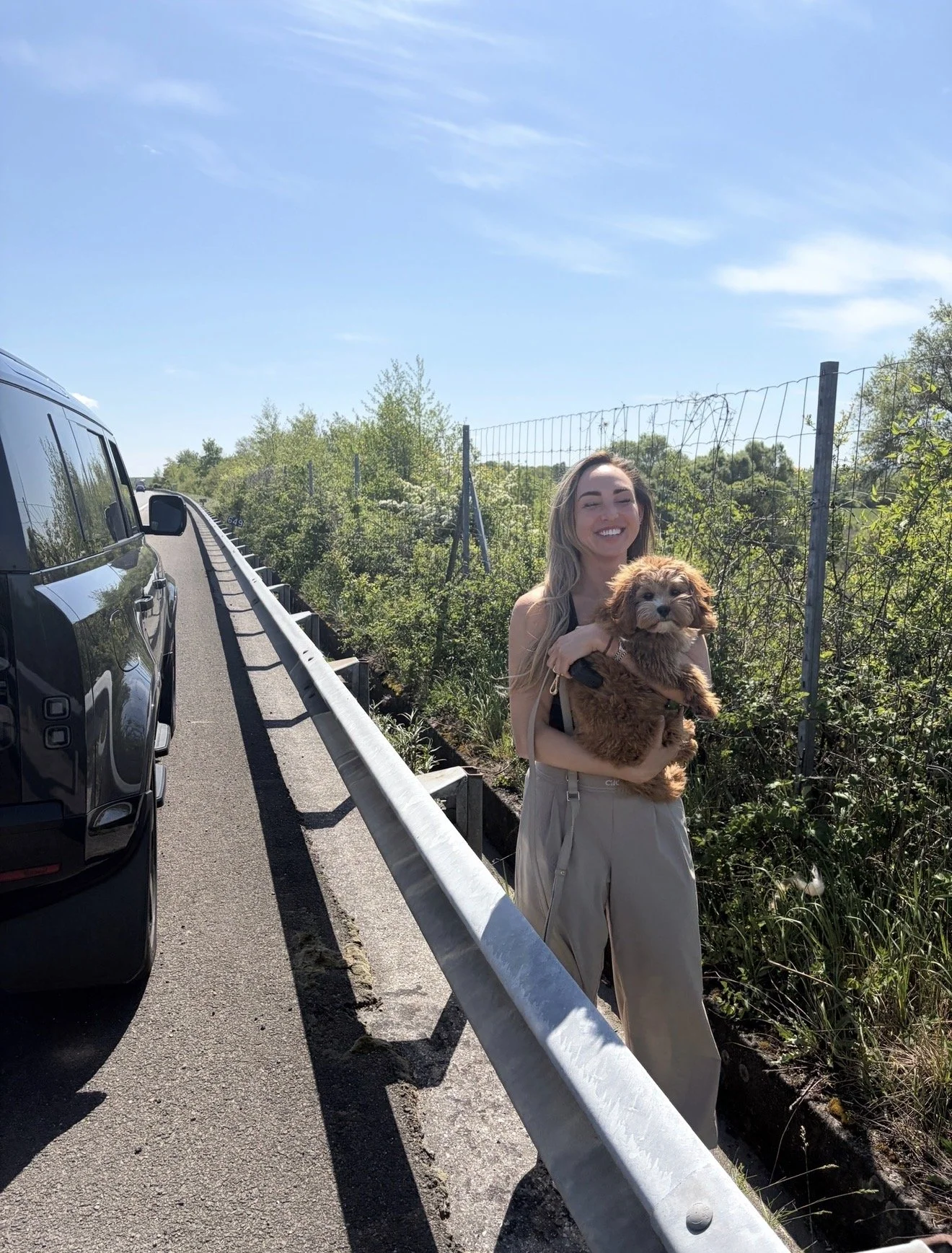
I'm going to be honest with you: we broke down. On a Spanish highway. With the dog in the back.
It sounds like a nightmare, and in the moment it was certainly stressful - but here's the thing. Because we had RAC European breakdown cover, the whole situation was handled brilliantly and we were never actually stranded. The RAC highway team came out to us on the motorway, which was reassuring in itself — someone came to us rather than us having to figure out what to do in a foreign country. They towed us off the highway safely and then took us to the nearest Land Rover dealership, who diagnosed the fault and got us sorted.
A stressful few hours? Yes. A holiday-ruining disaster? Absolutely not.
The lessons from this: get European breakdown cover before you go — not just standard UK cover, make sure it explicitly includes roadside assistance in Spain and France. And know that if you break down on a Spanish highway (autopista), there are dedicated highway assistance teams who are used to tourists and handle these situations regularly.
We also needed our V5 logbook (vehicle registration document) when dealing with the garage — they wanted to confirm the car was ours before working on it. I had mine, but I very nearly hadn't packed it. Don't make that mistake. Add it to your documents folder alongside your AHC and passports.
Documents You Need as a Driver in Spain
While we're on the subject of documents a couple of things that are easy to overlook when you're focused on all the dog admin.
In Spain, you are legally required to carry your driving licence with you at all times when driving. Not in the hotel room, not in your bag in the boot, on your person or accessible in the car. The Spanish traffic police can stop vehicles at any point, and driving without your licence on you can mean an on-the-spot fine.
You should also carry:
Your V5 logbook — as we discovered the hard way, this can be requested by garages and in some cases by police
Your passport
Your insurance documents — check your UK car insurance explicitly covers European driving and at what level
A reflective jacket and warning triangles — legally required in Spain and must be accessible from inside the car, not buried in the boot
Keep everything in a document folder in the glovebox or on the passenger seat. You'll probably never need most of it, but you'll be very glad you have it if you do.
Don't Forget: The Tapeworm Treatment Before You Come Home
This one is really important and easy to forget when you're having a wonderful time in the sun.
Before your dog can re-enter the UK, they must receive a tapeworm treatment (praziquantel)from a vet. The timing is strict: it must be given no fewer than 24 hours and no more than 120 hours (5 days) before you board your ferry or train home.
So if you're sailing on a Saturday morning, your dog needs to be treated between Monday and Friday of that week.
My advice: book this vet appointment before you leave the UK. Find a vet near where you're staying in Marbella, email them in advance (many have English-speaking staff — Marbella is very international), and get it in the diary for a few days before your return journey. Leave it too late and you'll be scrambling around trying to find an available appointment in a busy tourist area in the middle of summer. The treatment itself is very simple, it's just a tablet and the vet records it on your documentation. Easy.
The Return Crossing — What to Expect
Remember: When coming back through the Eurotunnel or ferry from Calais to Dover, the UK border check happens in France, before you board — not when you arrive in England. So when you pull into the Eurotunnel terminal in Calais, that's where you'll present your dog's paperwork (the AHC with the tapeworm treatment recorded).
Everything is checked before departure. When you drive off at Folkestone, you're home.
My Top Tips — The Quick Version
At the vet before you go:
Book an Official Vet (not all vets can issue AHCs — check first)
Confirm your dog's rabies vaccination is in date
Get the AHC issued 1–10 days before departure
If driving through France, ask for the certificate in English and French
Keep digital AND printed copies
At the Eurotunnel:
Add your pet to your booking when you buy your ticket
Have the AHC, proof of microchip and rabies vaccination ready at check-in
Allow extra time for EES biometric checks (new from October 2025)
Bring water for the dog — it's 35 minutes but they'll appreciate it
Planning your route:
Plan your dog stops in advance and build them into your route — this is something I didn't do properly and it genuinely affected our timings. A dog needs a proper stretch and toilet break every couple of hours, and if you haven't factored those in, you'll either be stopping in awkward places or pushing the dog further than is fair. Before you leave, map out specific stop points — French motorway airesare great for this as most have grassy areas — and add 20–30 minutes per stop to your total journey time. It sounds obvious but it's easy to underestimate.
Carry enough dog food and water for the full journey; don't rely on finding the right brand in Spain
Most 5-star hotels in France and Spain are pet-friendly but always call ahead to confirm and ask about any supplement
Kit for the dog — get this sorted before you go:
Make sure your dog is travelling safely and comfortably in the car. In many European countries it's actually a legal requirement to restrain your dog while driving and even if it weren't, it's just the right thing to do. We got all of Ralph's travel gear from By Teddy — a brilliant company that does really well-designed dog travel accessories. We used their travel seat and dog bed for the long drives, and a proper doggie seatbelt harness. He was comfortable, secure, and genuinely seemed to enjoy the journey rather than just endure it. Worth every penny.
Before coming home:
Book a vet in Marbella in advance for tapeworm treatment
Get it done 24–120 hours before your return crossing
Make sure it's recorded in writing on your travel documents
Would We Do It Again?
Without question. Hand on heart, this was one of the best trips I've ever taken, and having the dog with us made it better, not harder. He saw vineyards in Champagne. He paddled in the Mediterranean in the south of France. He got belly rubs from strangers in three countries. And yes, he handled a motorway breakdown like an absolute trooper.
The paperwork sounds daunting when you first read about it, but it really is just one vet appointment and a folder of documents. Once that's done, the rest is just driving, eating well, and watching your dog become an international traveller.
More posts coming soon - including full dog-friendly hotel reviews from the château in Champagne, our beach hotel in the south of France, and where we stayed in Marbella. Watch this space. 🐾
Have questions about taking your dog to Europe or looking for someone to book your trip for you Drop me a message and I would be happy to help happy to help!